SALTT Drink Mix and Heavy Metals
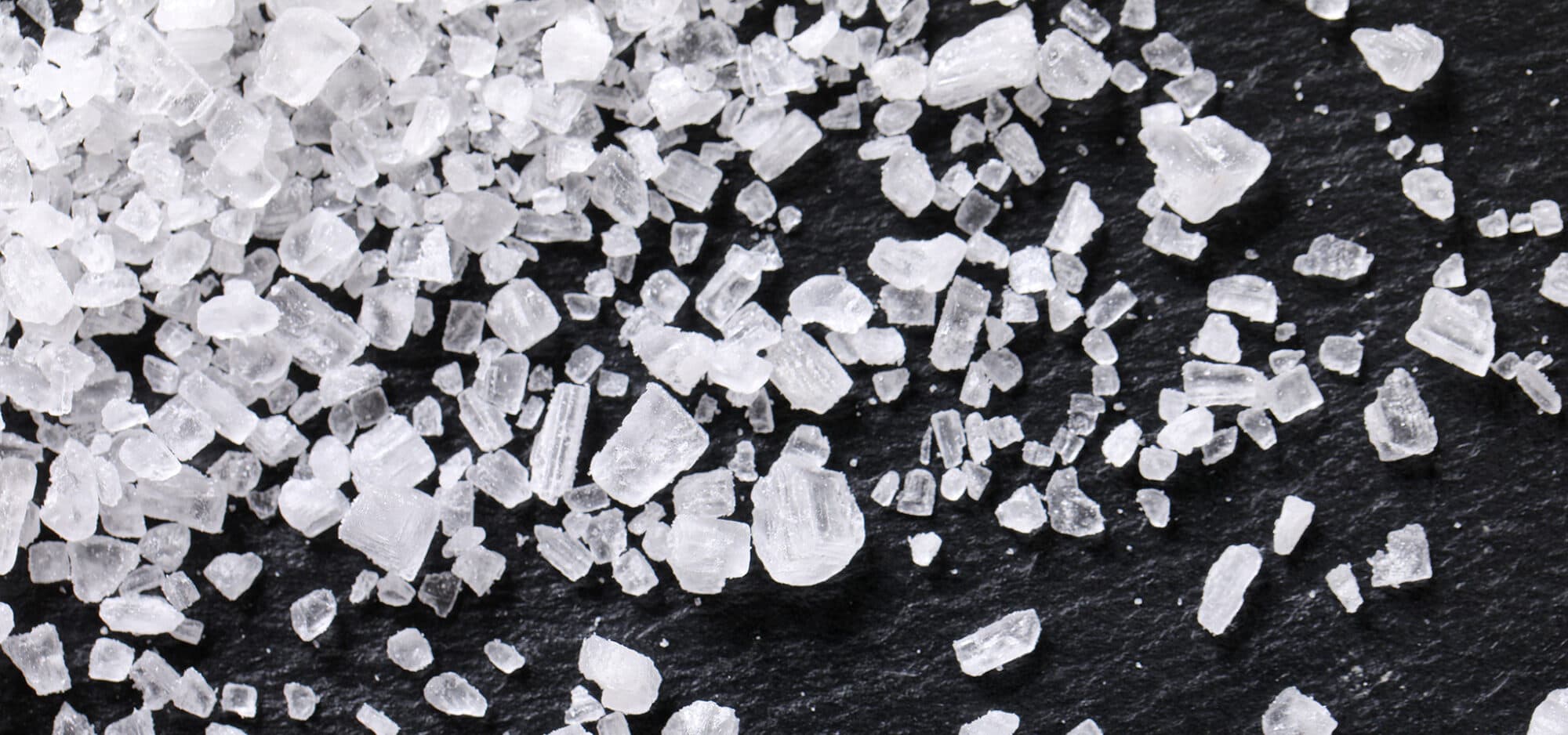
We tested SALTT Electrolyte Drink Mix Powder for heavy metals – all tested samples passed and comply with California Proposition 65.
The salt we use in SALTT is pretty cool stuff – it’s quite rich in trace minerals, especially magnesium, to the extent that SALTT has more magnesium than most other electrolytes and we’re not even adding magnesium! One concern that we’ve been asked is: do those trace minerals include heavy metals like lead? To answer this, we have done a number of extremely sensitive tests that can detect as little as 1 part per billion (0.0000001%).
Just for fun, here’s what 1 ppb equates to: a US Nickel happens to weigh exactly 5 grams. If you had 5 MILLION kilograms (just over 11 million pounds or exactly the water weight in two Olympic-size swimming pools) that 5g nickel would be 1 part per billion.
Because these tests are so sensitive, we do show a small level of lead and of arsenic in all of the samples tested. It’s nearly impossible to have absolutely ZERO, you just have a concentration lower than what the test can measure. None of the samples had any detectible level of mercury and only the Cocoa Loco (chocolate) had any measured level of cadmium. The average concentration of lead in the dry SALTT powder is 23 ppb. Raisins are 47 ppb (table 6), and celery is 27 ppb (table 7). It should also be noted that the 23 ppb for SALTT is for the dry powder only – when mixed with 1 liter of water (around 32 oz) the concentration drops to 0.023 ppb.
| Flavor | Arsenic (μg) | Cadmium (μg) | Mercury (μg) | Lead (μg) |
| Clean Slate | 3.06 | Not Detected | Not Detected | 0.065 |
| Cherry Chill | 2.69 | Not Detected | Not Detected | 0.145 |
| Lemon Lime Twist | 3.29 | Not Detected | Not Detected | 0.204 |
| Blue Slushies | 3.15 | 0.00045 | Not Detected | 0.063 |
| Cocoa Loco | 3.13 | 0.34346 | Not Detected | 0.148 |
| Mondo Melon | 3.27 | Not Detected | Not Detected | 0.138 |
| Feelin’ Peachy | 3.00 | Not Detected | Not Detected | 0.210 |
| Prop 65 Target | (under 10 μg) | (under 4.1 μg) | (under 0.3 μg) | (under 0.500 μg) |
The raw lab reports for each flavor are linked above. As noted previously – all of the samples tested are below the California Proposition 65 “OEHHA Safe Harbor Levels” listed below and consequently do not need to have a Prop 65 warning.
- Arsenic: 10 (μg/day) No Significant Risk Levels (NSRL) for cancer-causing chemicals
- Cadmium: 4.1 (μg/day) Maximum Allowable Dose Levels (MADL) for chemicals causing reproductive toxicity
- Mercury: 0.3 (μg/day) Maximum Allowable Dose Levels (MADL) for chemicals causing reproductive toxicity
- Lead: 15 (μg/day) No Significant Risk Levels (NSRL) for cancer-causing chemicals
- Lead: 0.5 (μg/day) Maximum Allowable Dose Levels (MADL) for chemicals causing reproductive toxicity. This is 1/1000 the “no observable effect level” of 500 μg to “provide an ample margin of safety“
One interesting question becomes: why are the levels of heavy metals so low? The water quality report for our office shows a concentration of 1.2 ppb lead and 99 ppb sodium in the local drinking water, shouldn’t a concentrated salt have WAY higher numbers?

The salt that we are using comes from the North arm of the Great Salt Lake which has some unique properties, even for the Great Salt Lake. The causeway that splits the lake makes the North section have a far higher concentration of minerals, it’s also what amounts to a giant settling pond that allows any heavy elements to sink. Because of the way the brine is harvested, we’re not getting a high concentration of heavier elements, only the lighter ones.

Chris Bair created Keto Chow to simplify getting good nutrition for "I just need food" meals, focusing on the best available proteins, vitamins, and minerals to save mental energy for important things. You don't have to be doing keto to use Keto Chow but it does make keto easier. In 2023 Chris created SALTT Electrolytes ('salty') as an alternative to existing electrolytes that contained questionable ingredients, like maltodextrin, and didn't align with what he wanted in an electrolyte supplement. The number 1 best seller is the unflavored Clean Slate.